Grading and inspections that follow one standard, not one person's eye
In farming and food processing, grading depends on a good eye, field and barn checks on experience, plant hygiene on paper checklists, and traceability on handwritten records. Standards are hard to keep consistent and harder to prove. We start by writing down grading, inspection and traceability standards, then put vision, multimodal and language models to work in the field and on the plant floor.

Where the process breaks
Produce and raw materials are graded by workers at the belt, judging size, colour and blemishes by feel. As people tire or a new crew comes on, grades stop matching what customers asked for.
Fields and barns are spread out and technicians walk them one by one. On a large operation they can only check some, so pests, disease and other problems are often found after they have spread.
Buying, testing, production and dispatch each keep their own books, and batch numbers are matched by hand. When a customer or inspector asks, several people spend hours piecing the trail together.
Process map
The problemWorkers grade by size, colour and blemishes at the conveyor, going by feel. Standards slip as people tire and shift from crew to crew, and customers send back loads that do not match the grade ordered.
How it runs on site
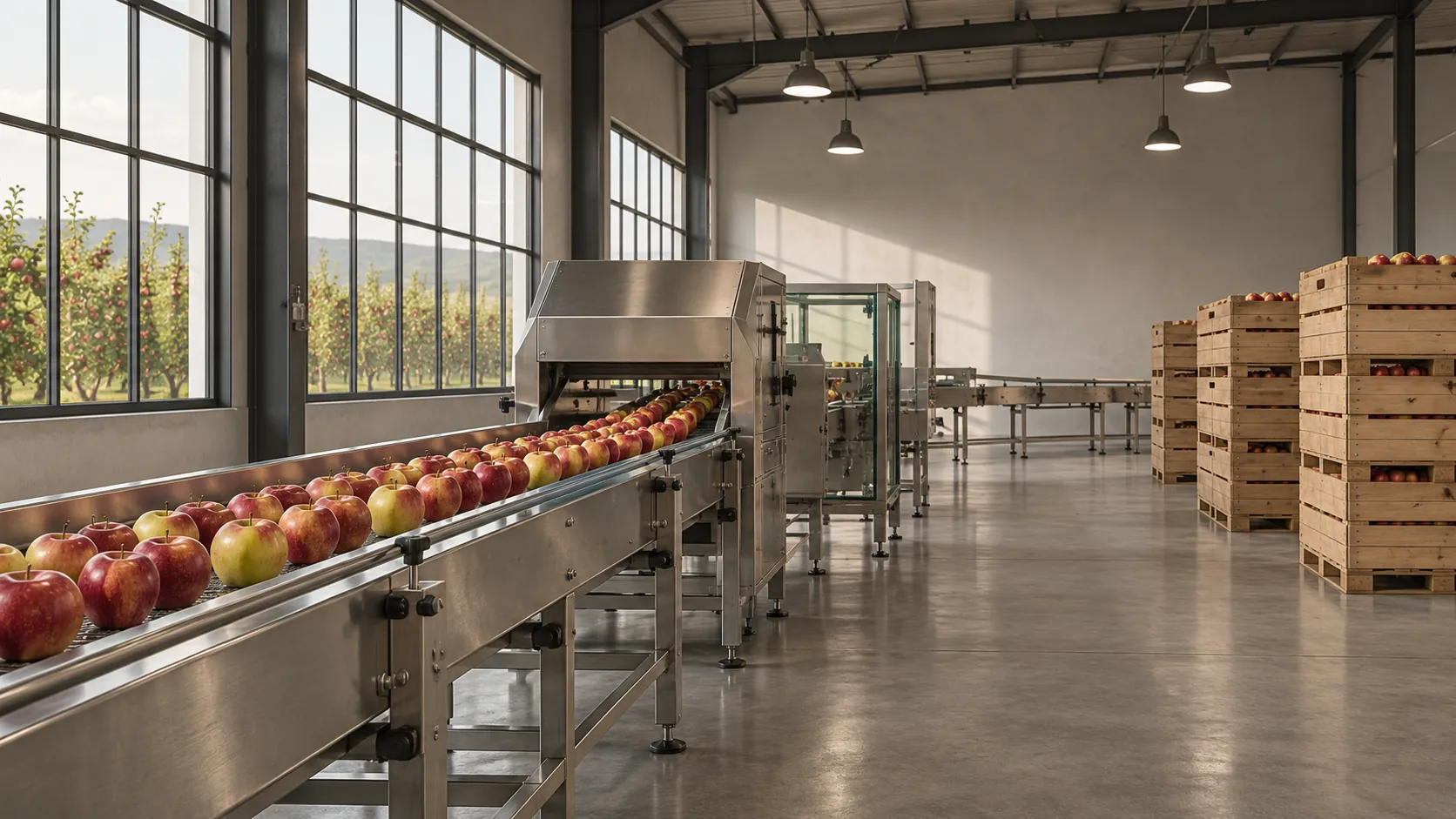
On a peak harvest afternoon, load after load is tipped onto the grading line. The camera photographs each piece, the edge device grades size and colour against the samples and sends it to the right lane, and clearly blemished fruit is rejected. Where a whole row of graders once stood, a few people now spot-check at the end of the line, photographing and tagging anything misgraded. Before the next batch, the lead reviews the checks and calls the technician to recalibrate if needed.
The problemTechnicians walk every plot and pen to spot pests, disease and poor growth. On larger operations they cannot cover it all, problems have often spread by the time they are noticed, and records are verbal or scattered photos.
How it runs on site
On the early-morning round, the technician walks a fixed route photographing each pen and plot, with photos saved on the phone where signal is weak. Back at the office, the model files them by plot and date and flags a few possible leaf spots and one group of animals that look unwell. The technician rechecks those first and calls in the agronomist or vet, who decides what to do; the outcome is added to the record.
The problemQuality staff walk the plant a few times a day with a hygiene checklist. Anything that happens between rounds goes unseen, the forms are mostly ticks with few photos, and it is hard to show what really happened when auditors ask.
How it runs on site
Before the morning shift, staff change into protective clothing and the camera at the entrance checks caps, masks and gloves. During production the model watches the raw and cooked zones and the floor for standing water. When a crate of raw material ends up in the cooked area, the team lead gets an alert with a snapshot, moves the crate and taps “handled”. The QC officer reviews the day’s log, removes false alarms, and the snapshots are ready for the next audit.
The problemPurchase slips, test reports, ingredient and dispatch records are mostly handwritten. Tracing a batch means matching batch numbers across several ledgers by hand, and answering a customer or regulator query takes a long time to piece together.
How it runs on site
At the weighbridge, the buyer photographs the handwritten purchase slip and test report, and the model records batch number, origin and weight. When materials go into production, the team lead photographs the issue slip and the model links raw batches to finished batches. When a customer calls about a case, the clerk enters the finished batch number and every step comes up at once; only one illegible issue slip is flagged for her to check.
Where to start
Start with capturing batch records. The paperwork already exists, a phone photo is enough to begin, no equipment changes are needed, a clerk checks anything uncertain, and the benefit shows the next time someone asks for a trace. Leave anything involving medication or feeding decisions alone; there the model can only offer reminders to qualified staff.
Common questions
Yes, with some planning. Field and barn photos can be stored on the phone or a local device and uploaded once there is signal. Grading lines and plant checks run on edge devices and do not need a connection. Plots with no power or signal at all depend on staff bringing the photos back.
No, and it should not. The model only flags possible pests, disease or growth problems from photos and suggests which plot or pen to visit first. Whether to treat, and with what, is decided by agronomists or vets after they see it in person. Poor photos or unusual symptoms also make the model less reliable.
Not from scratch, but samples need topping up. Grading standards and pest signs change with variety and season, so before a new variety or season, photograph fresh samples, recalibrate, and check more often in the first days. Operations that switch varieties frequently should expect noticeably more upkeep.
If volumes are small enough for a couple of people to grade, grading equipment will not pay off. If grades change with every customer and no one can state them, write the standard down first. If records have no consistent batch numbers yet, agree a numbering scheme before capturing anything.
Your situation
Every business runs differently. The solutions above are only the common patterns in this industry. Tell us the one step that hurts most and we will look at your actual case, starting with whether AI is the right fit.
Email us directlyhao@wallingtech.cn